|
|


|
|

What I learned by being a part of our committee
Part One – What It Takes To Make a Team
I have been a part of a lot of teams both in a leadership and in a support role. As I have done that work, I came to understand that the best teams have the following components:
When I became treasurer in February of 2019, I was pleased to discover a committee that already had in place all of these components.
I was welcomed into the work that they were already doing and brought up to date on current issues facing our group that I needed to take care of as the new treasurer.
I was aided in my transition into this new role by Sherwin O’Bar who handed over the documentation I needed to begin to learn my duties. I had been the group’s treasurer when our family first move to the area in the early 90s. A lot had changed since then. I so appreciated Sherwin’s guidance and his answers to my many questions.
As the newest member of the committee, I needed to learn our committee’s processes. In our monthly meetings, I mostly kept my head down as I tried to recreate the excellent reports that Sherwin had been providing our group for years. The rest of the team was very patient with me. After about 3-4 months I began to feel comfortable with my new role and took on more duties working with our Spring Street Center (SSC) team.
Jim had created job descriptions for each role at SSC. Each staff member had read these descriptions and signed their acceptance of them. The job descriptions included rates and rhythm of payments for services. It included how we would pay for the supplies for SSC. This documentation allowed me to see when payments were due for payroll and supplies. I appreciated the order that this created in my early work.
The work of any committee – if it just involves taking in the donations and paying the bills – takes on a rhythm that is pretty easy to maintain. It’s when you are faced with challenges that you learn what a team is really made of.
The first challenge I saw as a member of the team was the need to repair our sewer pipes that were experiencing a lot more traffic than they had before we started our Air BnB business. We would have eventually discovered the roots blocking the pipe. The business just brought it to our attention sooner.
Our house manager at the time was Marston Gregory. He interviewed multiple contractors and hired Bob Oats Plumbing. Soon our pipes were clean and running again. I wonder how long it would have taken us to get this work done without a House Manager with a clearly defined job description who could help the committee with the care of the building.
In my next part, I want to talk more about how our monthly rhythm helped us to make bigger decisions.
From Oswald,
At last Saturday’s dewan meeting, one of the helpers attending commented that they thought that we were doing such a great job that they couldn’t imagine anyone else doing the job as well as we did. And, they were afraid of what would happen if we didn’t continue as the committee.
That started me thinking – “Hey Wait A Darn Gone Minute. If you can only imagine a future where those who have done it before are the only ones that can continue to do the work, then you’re setting the committee up for burnout. And, you’re saying that if one, or all, of the committee members were to leave suddenly, there would be no other option than to stop having the work of the committee done by members. What then? Would we just pack up and shut the place down?” Maybe.
I would like to challenge each of you: Don’t allow yourselves to think we committee members are the only ones capable of doing the committee work. Imagine a future where you, along with others, willingly start doing these jobs. And as a result of this willingness, our group has more and more members capable of keeping our center running and growing.
How did we learn to work together?
The way that we “learned” to work together was by working together. In the beginning we brought many different skills to the work of the committee. However, we hadn’t worked together as a team before then. We needed time to find the right way of listening, collaborating and supporting each other in our individual roles.
As we did, the work became easier. And we also began to understand, through this mutual respect and work, that the work of the committee was too complex and needed to be simplified. This we have done.
How would you learn the roles?
Each of us has committed to assisting the new members of the committee through training, documentation and mentoring – when asked. You won’t be left without an understanding of where we are in the work. You will be left to figure out how to move forward as your new committee grows in experience and confidence.
We will also stand in support of you as you begin to carry out the work. We will continue, as active members of the group, to help in the work of the group. Some of us as helpers. Some of us through our hands and talents.
The Challenge
Begin now to consider a future in which you are a part of the new committee of our group, a committee that is supported by the past committee, and, supported by the members.
Dear All,
Message from Salamah O’Brien
Subud Members…
Log into to hear Subud Brother
Philip Quackenbush’s Music
Friday, Aug 6, 2021 – 6:30 pm
via livestream on
St James Cathedral Vimeo & Facebook pages:
Hear Cathedral Guitarist
Mark Hilliard Wilson
Offers a program with
Preludes & Fugues of
Seattle Composer Philip Quackenbush
(1936-2014) and other works!

(Photo by Rachman Cantrell)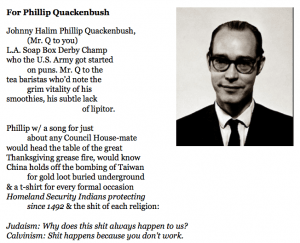
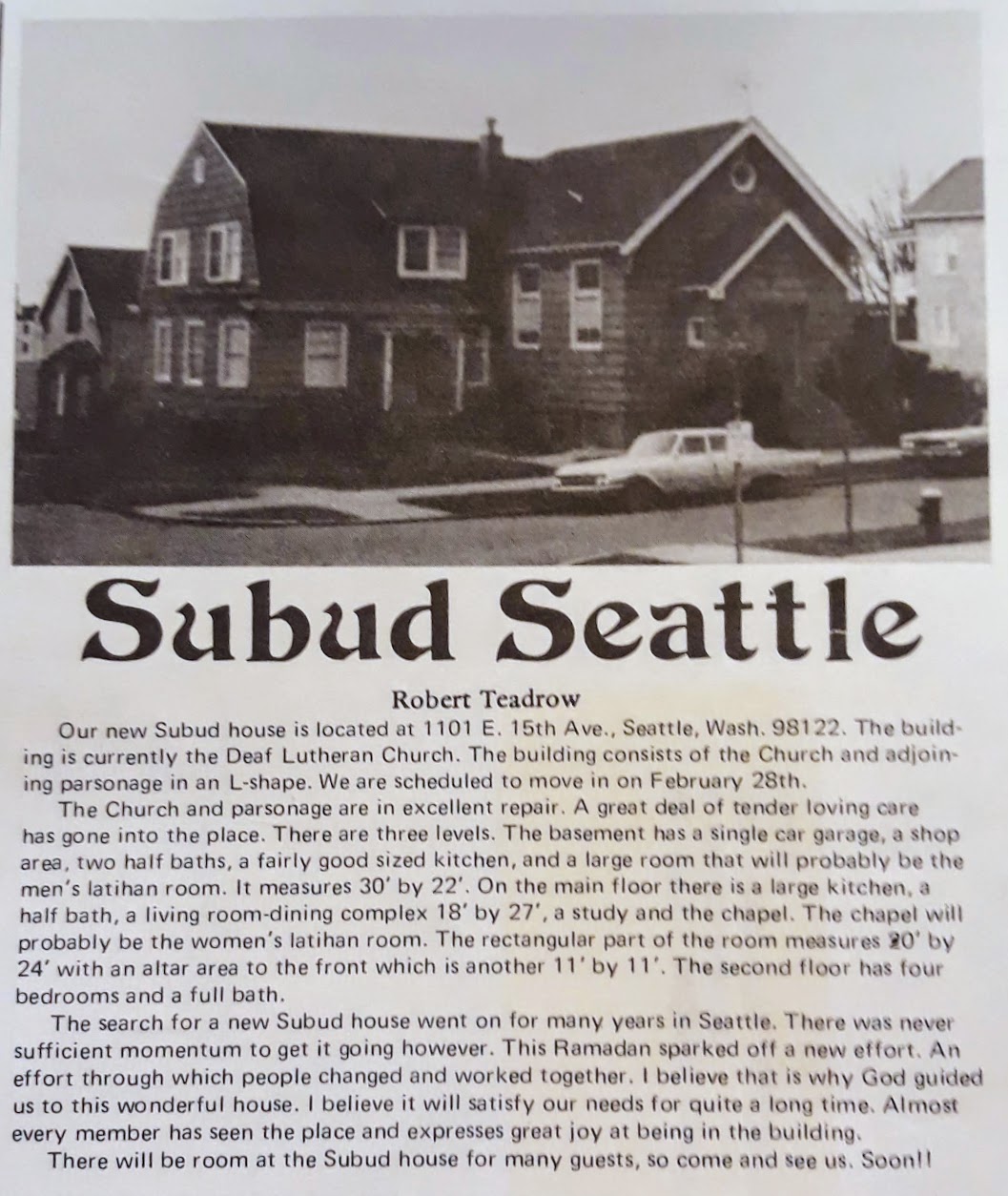
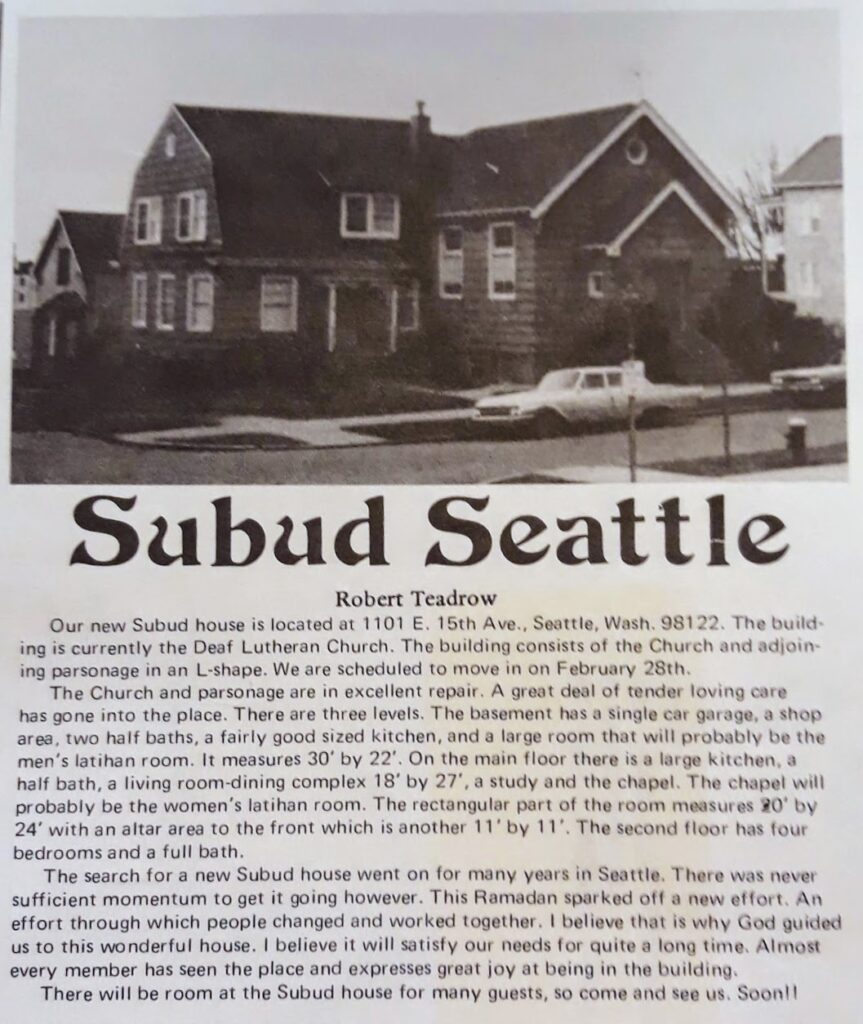
I found this article in an old Subud USA publication. It gives a bit of Subud Seattle history, written by Sebastian Tedrow around 1974. He describes the building which was formerly owned by the ‘Deaf Lutheran Church’ and goes on to say “Almost every member has seen the place and expressed joy at being in the building!” I hope we will keep continuing that feeling of joy for many years to come!
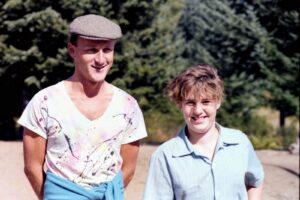
Patrick Morgan with Maria Cantrell, circa 1987 at an early PNW camp.
Those of us who have been around for a while might remember Patrick Morgan who passed away very recently. I was going to do a tribute to him in the newsletter but Paul Nelson has created an excellent one in the SICA news so I am posting the link below and urging all who remember Patrick to read it! Patrick also wrote a memoir of his life which is also in the recent issue. I remember him as a gentle, hard working soul who did a lot of work for Subud in the late eighties and early nineties. He along with a lot of other folks performed a ‘Peace Dance’ at the Evergreen College which was attended by many and seemed well received. I did a video of it but never got it put in a viewable state on the Internet. I have often wondered about what happened to Patrick in later years and this article, by his friend Mandy Landa, and his memoir has satisfied my wonder! Check it out!
Digital Camera
Digital Camera
Digital Camera
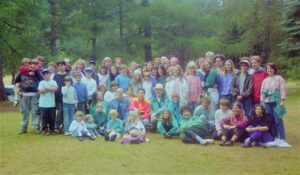
These are photos of a PNW art camp around 1989. Marston is a main character in this epic set of pics along with many other Northwest natives! See if you recognize anyone! Click the link to see all photos!
Dear Brothers and Sisters,
I received yesterday a letter from Rifka Several, on behalf of the directors of Susila Dharma, USA which I wanted to share with you.

February 1, 2021
SUBUD PACIFIC NORTHWEST – GREATER SEATTLE CENTER
Dear Seattle Center Sisters and Brothers,
Thank you so very much for your generous donation of $500.00 dated l/26/2l for Susila Dharma USA to support projects here in the United States and around the world.
individuals, families and communities are suffering. They are sick, hungry, hurt, dislocated – in need of basic services, education and community development. The programs that Susila Dharma USA supports are diverse but they all have one thing in common: they recognize and honor the one human spirit.
There is no one profile of a project supported by Susila Dharma USA. Children are able to attend school, receive healthcare and experience creative growth. Through training and microcredit, women heads-of-households become self-sufficient. Those affected by war, famine, illness, disaster, disease, and domestic violence regain physical, emotional and spiritual well-being.
ln yearly evaluations, Susila Dharma projects demonstrate that they are:
o Holistic and diverse
o Locally initiated
o Multi-cultural
o Committed to excellence and sustainability
We sincerely appreciate your support for our shared mission to promote social justice, equality and harmony
Yours,
Rifka Several for the Susila Dharma USA Board of Directors.
Anyone can contribute to SDUSA. Please click this link to find out More.
Love, Oswald